
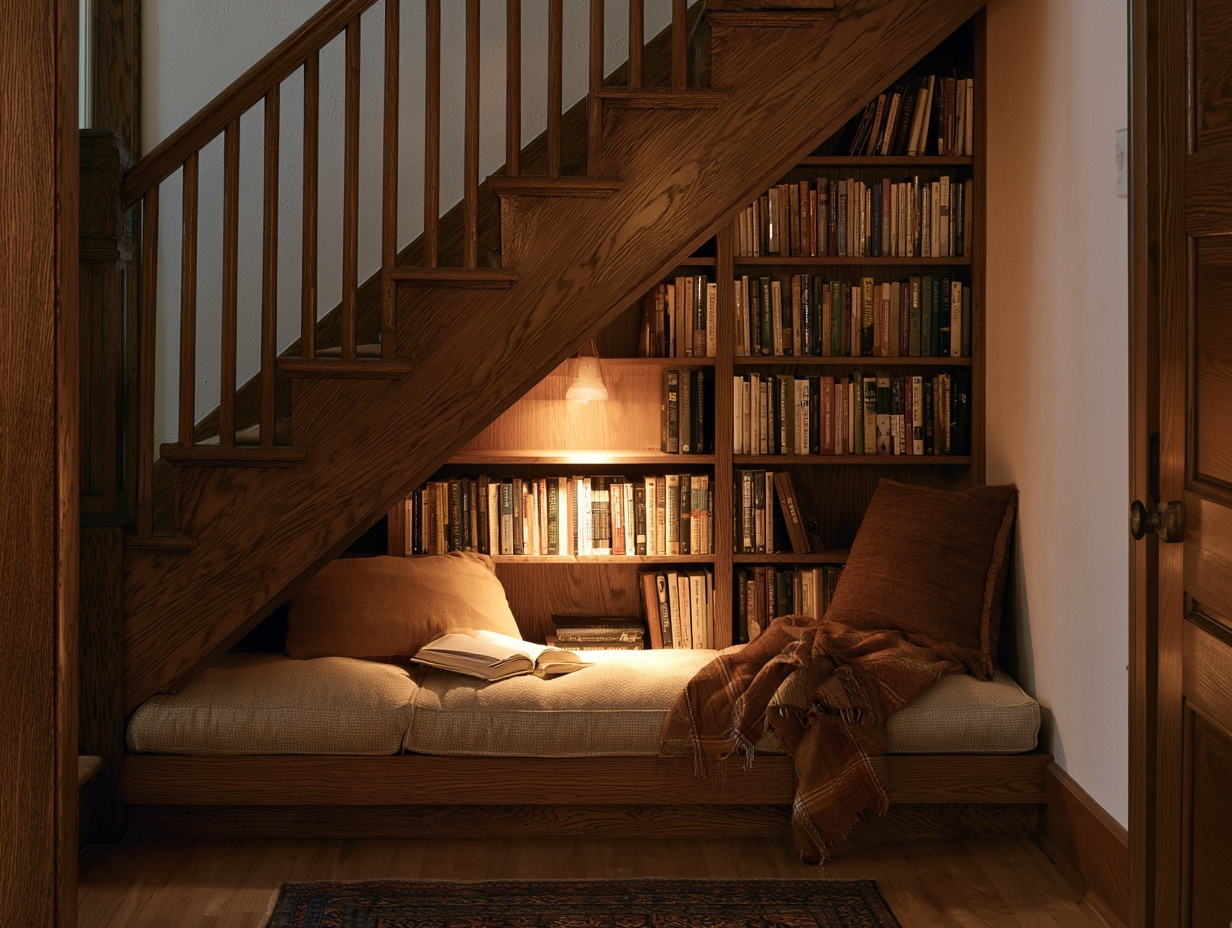
What if the space you keep walking past could become your favorite spot in the house? These AI-generated reading nook ideas explore 10 ways awkward corners, forgotten closets, empty walls, and other overlooked spaces could become places worth curling up in.
A note about the images: These are AI-generated visual concepts created to explore design possibilities and spark ideas. They are not photographs of completed renovation projects.
1. Turn the Space Under the Stairs Into a Reading Nook
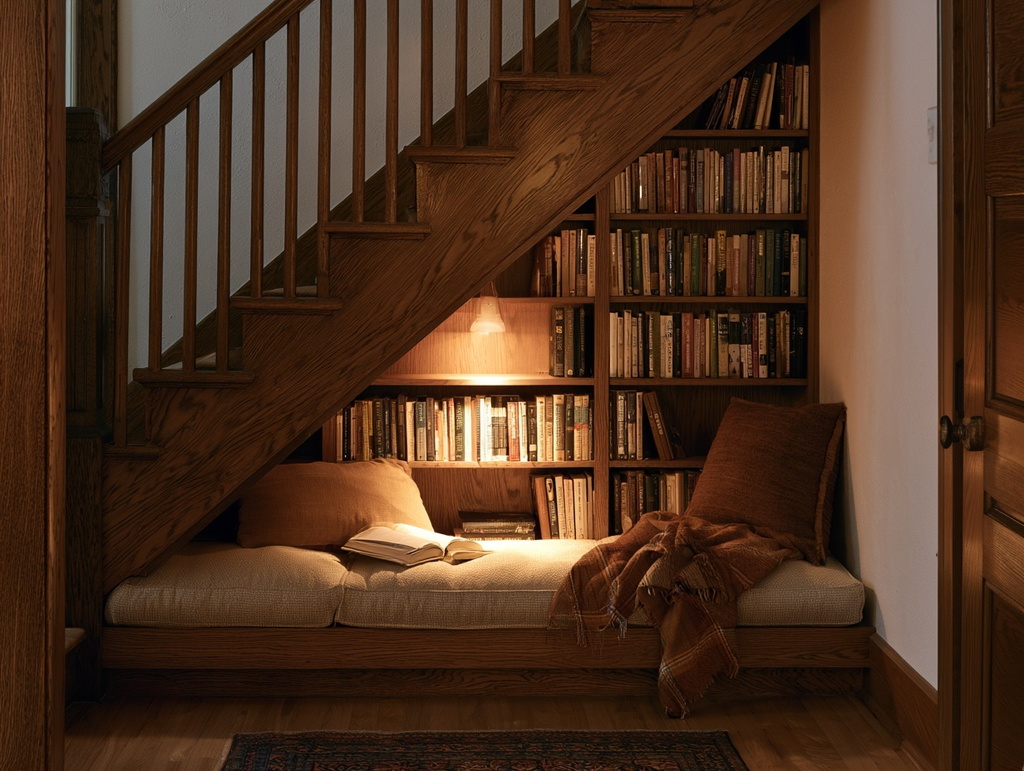
The unused space beneath a staircase can hold more than storage. Here, the slope becomes part of the nook itself, with bookshelves fitted into the wall and a deep cushioned bench tucked into the lowest part of the space. The warm wood, layered cushions, and small reading light make an otherwise awkward footprint feel like a room of its own.
Reading Nook Ideas for an Empty Corner
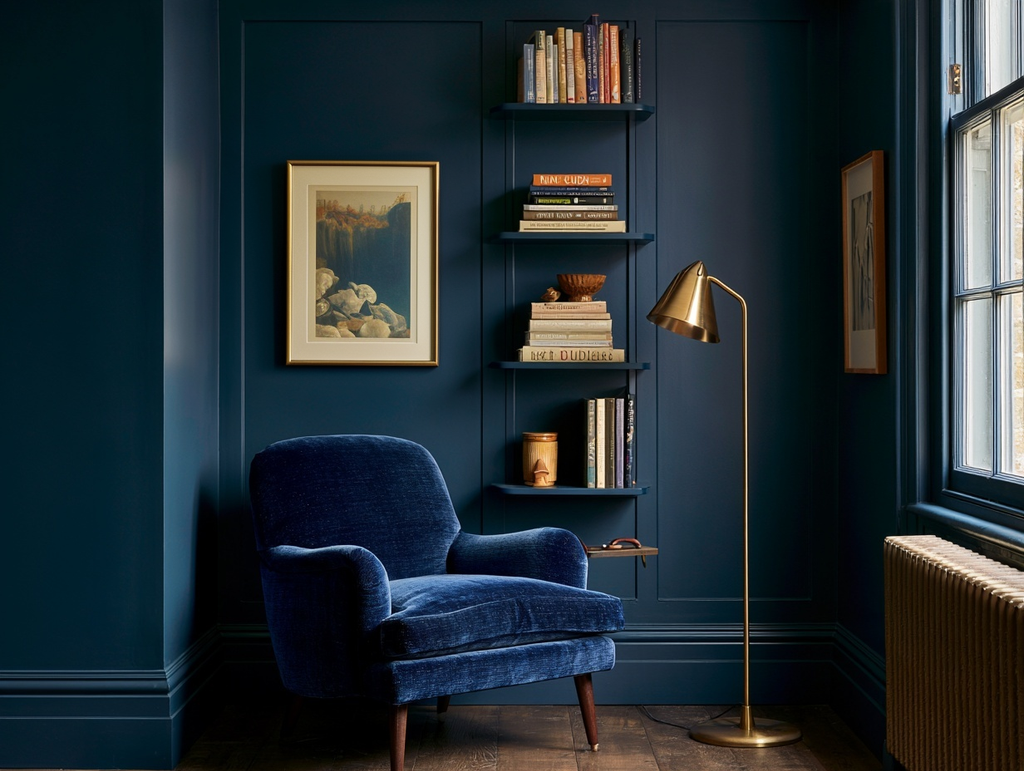
An empty corner doesn’t need built-ins or a large footprint to become useful. A comfortable chair, dedicated reading light, and a few shelves can give the space a clear purpose. Here, carrying the deep blue across the walls, trim, and shelving makes a small corner feel intentional rather than like a chair that happened to land there.
3. Turn an Unused Closet Into a Reading Nook
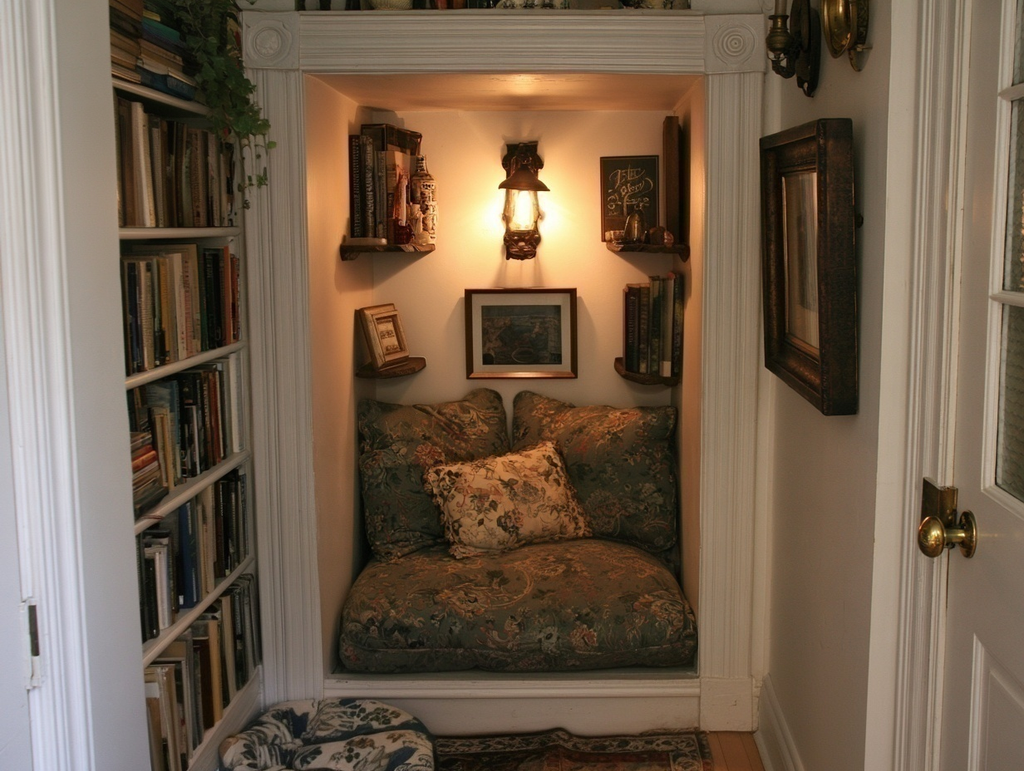
A closet that isn’t earning its keep can become a surprisingly cozy place to read. Removing the door and using the full opening gives the nook a tucked-away feeling without closing it off from the room. A deep cushioned seat, a few small shelves, and warm lighting turn a shallow space into somewhere that feels comfortable enough to stay awhile.
4. Turn a Wide Hallway Into a Reading Nook
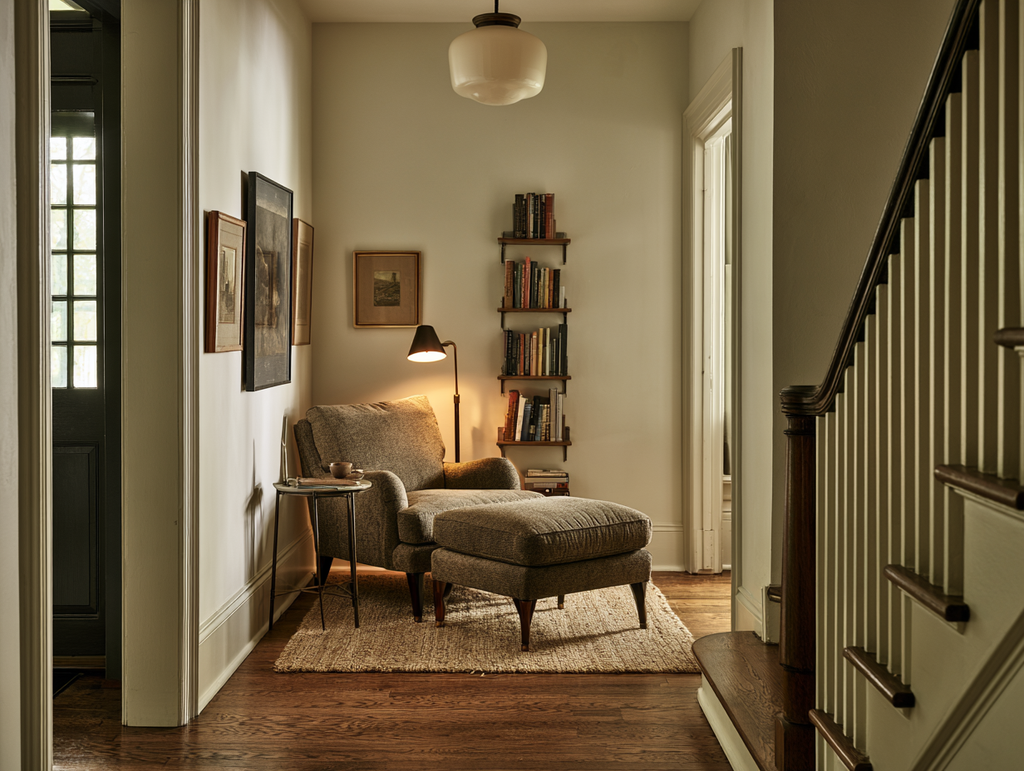
A wide hallway or landing can offer enough room for more than a path from one space to another. An upholstered chair and ottoman create a comfortable place to read without blocking the walkway, while narrow shelving takes advantage of the wall without requiring much floor space. It turns an overlooked transition area into somewhere you might actually want to stay.
5. Turn the Space Beside a Fireplace Into a Reading Nook
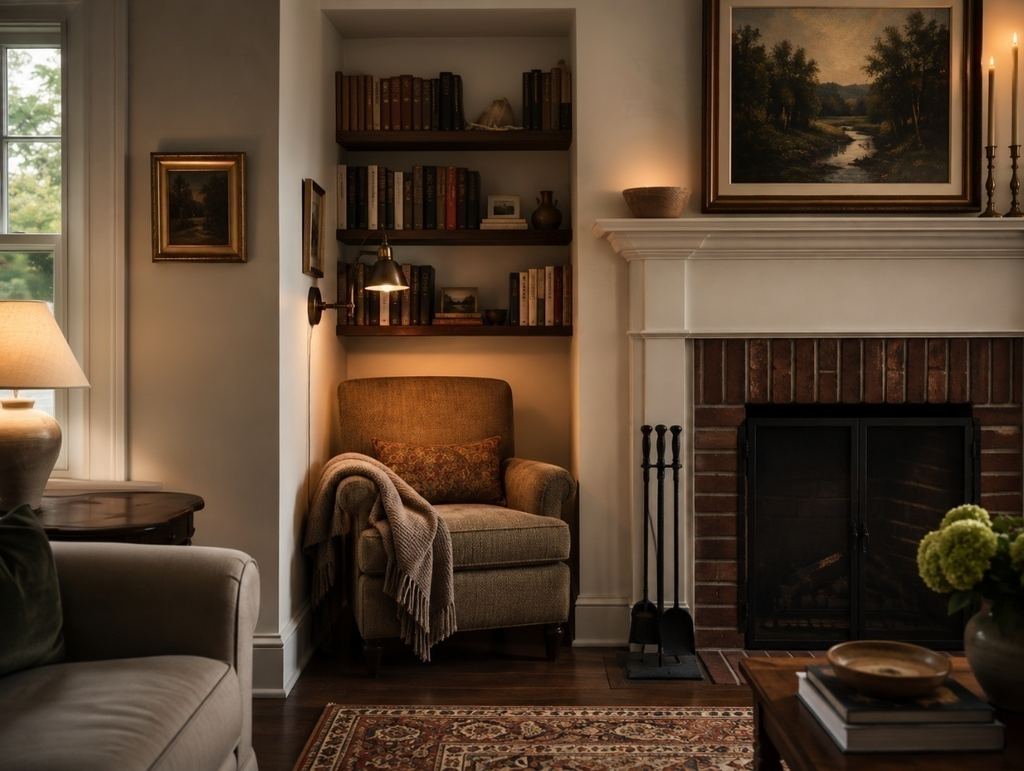
The narrow space beside a fireplace can be easy to overlook, especially when it isn’t wide enough for a larger piece of furniture. Here, a comfortable chair fits into the recess while shelves above use the vertical space for books. A dedicated reading light makes the small footprint functional without competing with the fireplace or the rest of the room.
6. Turn a Window Alcove Into a Reading Nook
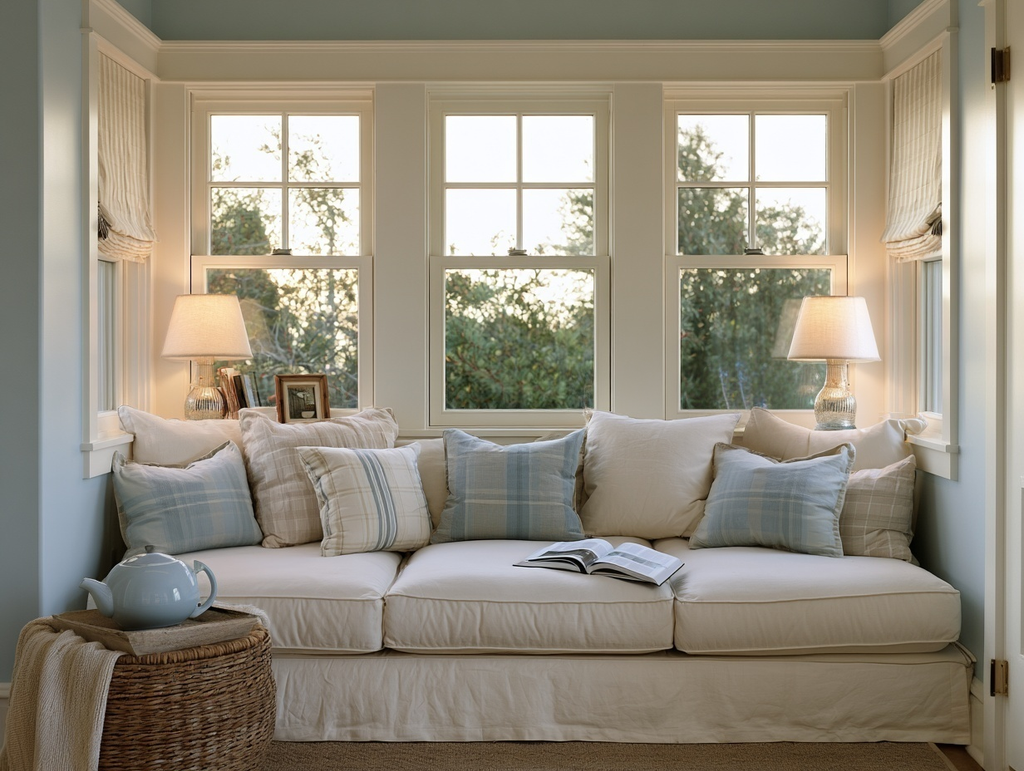
A window alcove already has one of the best ingredients for a reading nook: natural light. A deep cushioned seat makes use of the full width of the space while keeping the floor open, turning an architectural feature that might otherwise sit empty into a comfortable place to read. The windows do most of the work, so the nook doesn’t need much else to feel complete.
7. Turn the End of a Hallway Into a Reading Nook
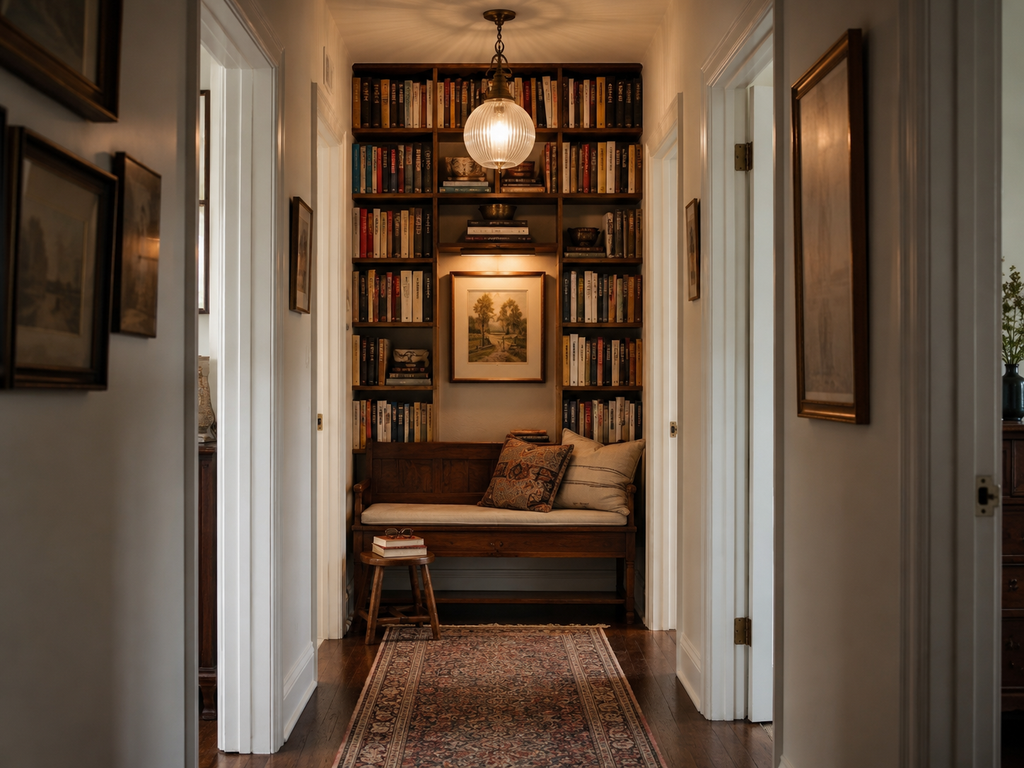
The end of a hallway can be more than a place you walk toward and turn around. When there is enough depth, a shallow bench can turn that dead-end space into a compact reading nook without taking over the passageway. Books and warm lighting give the nook its own identity while the tucked-away location makes it feel surprisingly private.
8. Build a Reading Nook Into a Wall of Storage
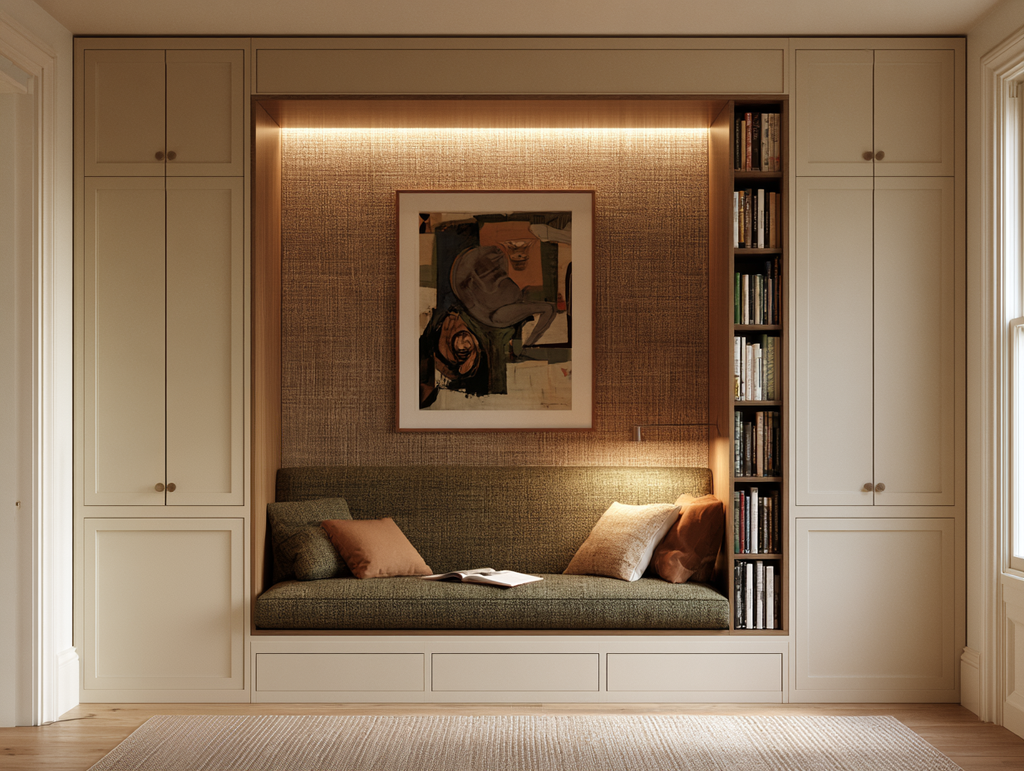
A wall of storage can do more than hide what you need to put away. By leaving an opening between floor-to-ceiling cabinets, the storage itself can frame a recessed place to read. Here, the upholstered bench, integrated lighting, and slim bookshelf turn the center of the wall into a destination rather than another cabinet. It is a more streamlined approach to a reading nook and works especially well when you want seating and storage to feel like part of the room’s architecture.
9. Turn a Low Attic Space Into a Reading Nook
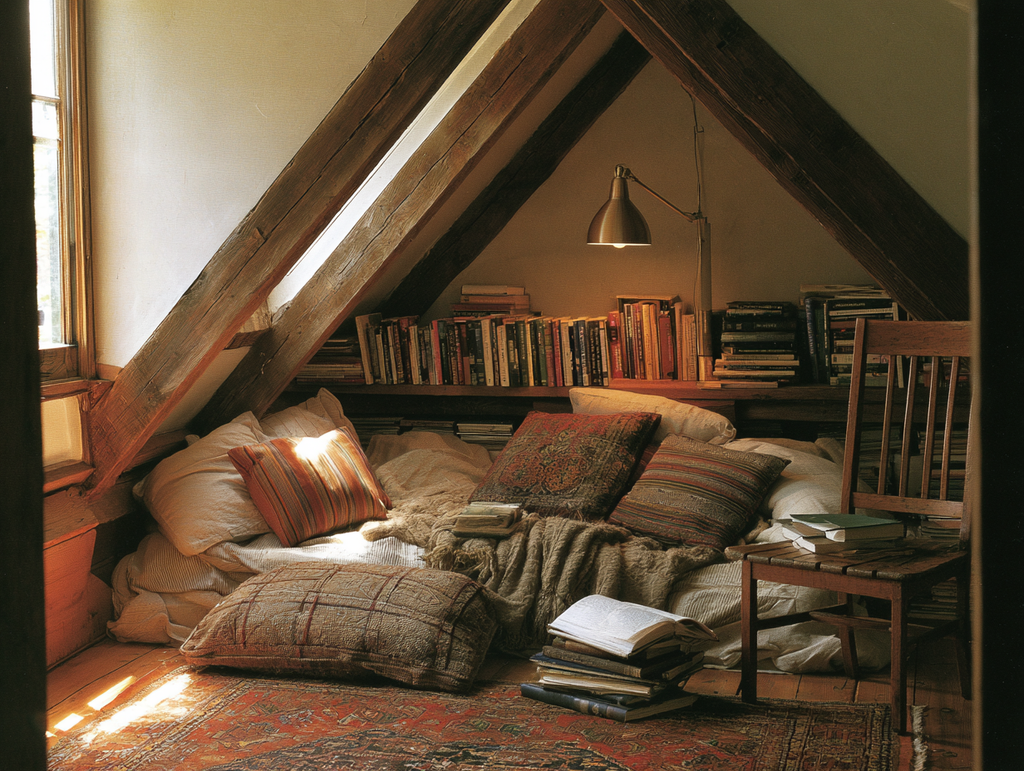
Low ceilings and sloped walls can make attic space difficult to use with conventional furniture. A reading nook doesn’t need full standing height, which makes the area beneath the eaves much more useful. Here, floor-level cushions take advantage of the lowest part of the room, while books are kept along the wall where taller furniture wouldn’t fit. Instead of trying to make the awkward architecture disappear, the nook works with it.
10. Turn an Unused Breakfast Nook Into a Reading Space
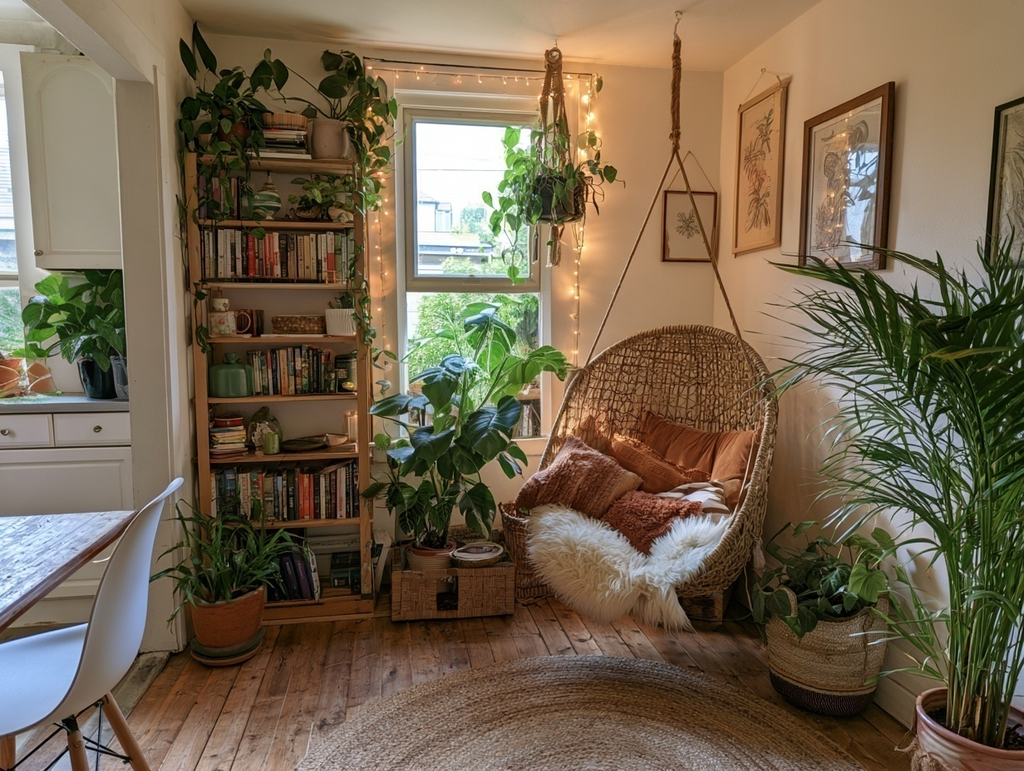
A breakfast nook doesn’t have to stay a dining space if no one actually uses it that way. Here, part of the area has been claimed for reading instead, with a hanging chair, books, and plants creating a relaxed spot beside the kitchen. Keeping the original architecture intact means the space could still change again later, but for now it has a purpose that fits the way the room is actually being used.
The space doesn’t have to be perfect to have potential. An awkward corner, an unused nook, or a place you’ve stopped noticing can become something completely different when you look at what the space already gives you instead of what it lacks. That’s the idea behind these concepts: not every overlooked space needs a renovation. Sometimes it needs a different way of seeing it.